
September 8, 1971: Perugia Lazio 1-3, Coppa Italia

Lucky but convincing
Lazio beat Perugia 3-1 to move closer to Coppa Italia qualification

The season so far
The disastrous 1970-71 season had culminated in a relegation to Serie B for the Biancocelesti. It was a devastating and unexpected fall for the club so President Umberto Lenzini, on a suggestion from sporting director Antonio Sbardella, chose a young manager called Tommaso Maestrelli who had done well in Serie C and Serie B with Reggina and Foggia.
The first problem the club had to face was the fact that Giorgio Chinaglia demanded to be sold. He refused to play in Serie B and was not entirely happy with the change of management. Maestrelli convinced him to stay.
Two fundamental future players joined Lazio in the summer transfer window: Luigi Martini, from Livorno, and Giancarlo Oddi returning from his loan spell at Massese. Lazio also signed goalkeeper Claudio Bandoni (Fiorentina) and midfielder Rino Gritti on loan from Lecco. Rino Marchesi, Nello Governato and Giancarlo Morrone left Lazio as free agents as well as Ferruccio Mazzola and Michelangelo Sulfaro on loan to Fiorentina.
Today was the third official game of the season, the Coppa Italia group stage. Lazio had been drawn with Roma, Atalanta, Perugia and Ternana. The had won the derby and drawn at Bergamo. The Biancocelesti had three points in two games as did Perugia, Atalanta had 1 point and had played two, Ternana 1 but had played one and Roma were on zero having only played the game against Lazio. A win today in Perugia would almost secure qualification.
The match: Wednesday, September 8, 1971, Stadio Santa Giuliana, Perugia
Lazio continued their excellent start to the season with a 3-1 victory over Perugia, although the scoreline perhaps flattered Tommaso Maestrelli's side. The Biancocelesti benefited from some favourable circumstances, particularly after Perugia were reduced to ten men, but they also showed considerable strength and organisation to come away with an important victory.
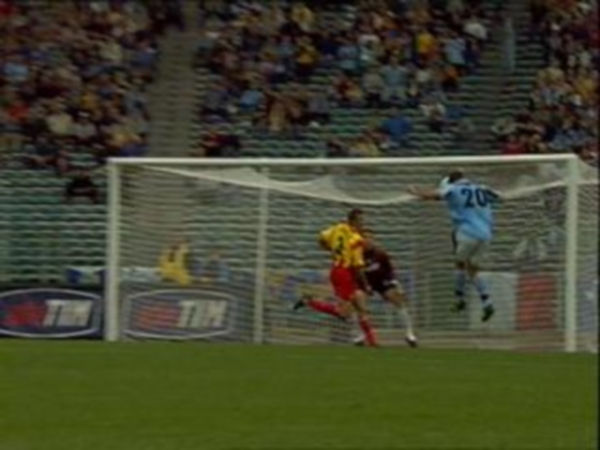
Perugia started aggressively, putting Lazio under pressure during the opening ten minutes. The visitors, however, responded with a cleverly worked set piece. A free kick from deep was taken quickly, with Costantino Fava finding Franco Nanni on the left. His shot forced the goalkeeper to come out, but Giorgio Chinaglia followed up brilliantly, leaving his marker behind and turning the rebound into the net to give Lazio the lead.
The rest of the first half was relatively uneventful. Perugia struggled to find a way through a well-organised Lazio defence, while Maestrelli's team showed that they were capable of playing without the injured Giuseppe Massa. Pierpaolo Manservisi frequently dropped deeper to help the midfield, while Fortunato provided an important attacking contribution.
The game came to life after the interval. Perugia coach Guido Mazzetti used both of his permitted substitutions, bringing on Nicola Martellossi and Gianni Facchinello and allowing Carlo Volpi to move further forward. The changes immediately paid dividends. Perugia increased the pressure and, after 15 minutes, equalised. Volpi combined with Traini creating the space for his team-mate, who finished with an excellent strike.
The match appeared to have been reset, but the turning point came shortly afterwards. A long ball created a scramble involving Chinaglia, Facchinello and Perugia defender Eddo Cartet. There was an exchange between Chinaglia and Facchinello, and the referee judged the Perugia player to have committed the more serious offence, sending him off.
With Perugia down to ten men, Mazzetti made a bold decision: he abandoned the use of a sweeper in search of the victory his team needed. It left enormous spaces behind the defence, and Lazio quickly took advantage.
Perugia still had opportunities. Volpi headed narrowly over in the 71st minute, but moments later Manservisi broke down the left and, with virtually nobody between him and the goalkeeper, calmly finished to restore Lazio's lead.
The decisive goal came in the 79th minute. A failed clearance fell kindly to Chinaglia, who raced clear and finished his solo run without difficulty to make it 3-1. It was his second goal of the afternoon and particularly significant given that he had reportedly been doubtful even to play.
Lazio could even have added a fourth, while Perugia also missed another opportunity before Chinaglia was substituted by Arrigo Dolso. The final score therefore gave Maestrelli's team a comfortable victory, although the circumstances behind it meant that the result should not be taken as definitive proof of Lazio's superiority.
There was still work to do, particularly defensively, where Lazio's aggressive approach occasionally brought them close to disciplinary trouble. The home crowd was furious with Facchinello's dismissal, especially given the number of fouls committed by both sides.
But ultimately the result was what mattered. Lazio had beaten their main rivals for qualification and moved to within touching distance of the next round. And if there was an element of luck involved, Maestrelli would surely have accepted it: sometimes fortune is simply another reward for being in the right place at the right time.
Who played for Perugia
Grosso, Casati, Vanara, Volpi, Carlet, Mazzia, Innocenti (46' Martelossi), Traini, Urban, Tinaglia, Colausig (46' Facchinello)
Substitutes: Vecchione, Marcucci, Agretti
Manager: Mazzetti
Who played for Lazio
Bandoni, Facco, Legnaro, Wilson, Papadopulo, Martini, Manservisi, Fortunato, Chinaglia (76' Dolso), Nanni, Fava
Substitutes: Di Vincenzo, Oddi, Polentes, Gritti
Manager: Maestrelli
Referee: Gialluisi
Goals: 9' Chinaglia, 59' Volpi, 71' Manservisi, 76' Chinaglia
What happened next
Lazio managed to top their group in the first phase of the Coppa Italia. In the second group phase, played in June they came fourth and did not reach the final.
Lazio started the Serie B campaign slowly, losing the first two games away from home, but from the 6th match onwards things improved.
In the November transfer window Lazio signed Carlo Facchin and Giambattista Moschino, returning after nine years, plus Alessandro Abbondanza on loan from Napoli with Pierpaolo Manservisi going in the opposite direction. Arrigo Dolso also left (on loan to Varese).
At the end of the first half of the season the Biancocelesti were third, one point behind Palermo and Ternana and two points ahead of Reggiana and Perugia.
With five games to the end of the season there were five teams fighting for promotion: Palermo and Ternana 44 points, Lazio 43, Como 42 and Reggiana 41. With two games to the end, the Biancocelesti had reached second place and a week later they topped the table with Ternana, one point ahead of Palermo and two above Como. All Lazio needed was a point at Bari and that is exactly what happened.
The Biancocelesti were able to secure promotion thanks to an excellent attack with Chinaglia, Massa and Abbondanza, and a very strong defence with goalkeeper Bandoni and Giuseppe Wilson. The midfield was not up to par and there was the need to find better players. They would come in the following season.
Wilson was the player with most appearances this season (48), Chinaglia the top goal scorer (26 goals)
Lazio vs Perugia

Lazio have played Perugia 41 times: 24 in Serie A, 12 in Serie B and 5 in Coppa Italia.
First game: Sunday, November 5, 1967, Lazio Perugia 2-2
First Lazio Home Win: Sunday, December 19, 1971, Lazio Perugia 4-1 (Serie B)
First Lazio Away Win: Wednesday, September 8, 1971, Perugia Lazio 1-3 (Coppa Italia)
Latest Lazio Home Win: Sunday, November 23, 2003, Lazio Perugia 3-1
Latest Lazio Away Win and last match played: Sunday, March 28, 2004, Perugia Lazio 1-2
Total Lazio Wins: 20 (15 home, 5 away)
Total Draws: 14 (6 home, 8 away)
Total Perugia Wins: 7 all in Perugia
Best Lazio Win: Lazio Perugia 5-0, January 20, 2002
Match with greater number of goals: 5 (Lazio Perugia 4-1, December 19, 1971 & May 11, 1997; Lazio Perugia 3-2, August 18, 1982 (Coppa Italia); Lazio Perugia 5-0, January 20, 2002
Worst defeat: Perugia Lazio 4-0, January 8, 1978
A brief history of Perugia
The Associazione Calcio Perugia was formed in 1905. It was a merger of two local sports clubs, Braccio Fortebraccio and Libertas.
In the years between 1905 and 1923 they played at local regional Umbrian level.
From 1923-25 they played in the Marche regional group of the Seconda Divisione and in 1925-26 in the Umbrian group. They finished 2nd twice and 3rd.
In 1926 they pulled out of the Seconda Divisione Sud and finished 5th a year later.
Between 1928 and 1930 they played in the Terza Divisione Umbria and then were included in the Prima Divisione Sud (3rd national tier).
In 1932 the Biancorossi were promoted to Serie B but in 1935 were relegated and went bankrupt.
In 1935 they then started up again in the 4th tier. In 1937 they were included in a newly enlarged Serie C format. They finished 10th, 6th, and 4th before World War II interrupted the leagues.
When things returned to normal they won promotion to Serie B in 1946. Two years later they were relegated and then spent most of the 1950's in Serie D.
In 1959-60 they were entered into Serie C as Umbrian representatives. In 1967 they won the league and made it back up to Serie B.
There followed stable years in the 2nd tier until 1975 when they topped the league and won their first historic promotion to Serie A. These would be the best years in their history with 8th, 6th, 7th, 2nd and 7th places.
The 1977-78 season was marked by a tragedy when Perugia player Renato Curi collapsed and died of a heart attack during a home game against Juventus on October 30 1977. The ground was named in his honour on November 26.
The second place of 1978-79 was under manager Ilario Castagner and the team became known as "Il Perugia dei Miracoli". The Grifoni went the whole season unbeaten in the league (an achievement never accomplished by any club until then). The usual line-up was: Nello Malizia, Michele Nappi, Antonio Ceccarini, Mauro Della Martira, Paolo Frosio, Paolo Dal Fiume, Cesare Butti, Franco Vannini, Salvatore Bagni, Gianfranco Casarsa and Walter Speggiorin.
In 1979 Perugia confirmed their new status as a competitive club by signing prolific striker Paolo Rossi on loan from Vicenza. They finished 7th and were allegedly involved in the Totonero match fixing scandal. Rossi and other players were banned and Perugia docked 5 points for the successive season when they got relegated.
The early 1980's were spent in B until 1986 when they fell even further and were punished with relegation to Serie C2 for their involvement in the second Totonero scandal.
In 1988 they made it up to C1 and in 1994 back to Serie B. In 1998 they finally won promotion back to Serie A under various managers including Ilario Castagner from March onwards.
The Umbri stayed in the top flight until 2004. They finished 14th, 10th, 11th, 8th, 9th and 15th. In 2000 of course, they helped Lazio win the Scudetto by defeating Juventus in the famous rain drenched game of May 14.
In 2005 Perugia went bankrupt and restarted from Serie C1 which in 2008 became Lega Pro Prima Divisione. They remained in Lega Pro until 2010 when they again had financial problems and were forced to change name to ASD Perugia Calcio and join the 5th tier.
They immediately won promotion to Lega Pro Seconda Divisione and the Serie D Coppa Italia and took on the name A.C Perugia Calcio. The following season they won promotion to Lega Pro Prima Divisione and won the Supercoppa of LP2.
In 2014 they made it back to Serie B where they stayed six years finishing 6th, 10th, 4th, 8th, 8th and 16th.
In 2020 they were relegated but bounced straight up again and then finished 8th in Serie B.
In 2023 the Grifoni were relegated again and are currently still in Serie C.
Perugia have played 13 seasons in Serie A and 29 in B. They have taken part in 2 UEFA Cup competitions and in 2003 won the Intertoto Cup. They are rated at number 35 in Italy for footballing tradition.
Their top 5 players with most appearances are; Dante Fortini 360 (1956-66), Pierluigi Frosio 323 (1974-1984), Michele Nappi (1974-1982, 1984-85), Oriano Cenci 191 (1960-1967) and Elio Vanara 188 (1968-1974).
Perugia's top 5 goal scorers are; Giovanni Cornacchini 60, Fabio Mazzeo 44, Samuel Di Carmine 42, Fabrizio Ravanelli 41 and Giovanni Urban 36.
Some of their stars through the years have been; Franco Vannini (1974-79), Pierluigi Frosio (1974-79), Salvatore Bagni (1977-81), Paolo Rossi (1979-80), Fabrizio Ravanelli (1986-89 and local boy), Federico Giunti (1991-97), Gennaro Gattuso (1995-97), Hidetoshi Nakata (1998-2000), Fabio Liverani (2000-2001), Fabrizio Miccoli (2002-03), Marco Materazzi (1995-96, 1997-98, 1999-2001), Fabio Grosso (2001-2004).
Perugia as mentioned are known as the Griffons and play in red and white. These were chosen in 1921 and are also the colours of the town. The jersey is traditionally mainly red with white being less prominent.

Perugia play their home games at the Renato Curi stadium. It was originally known as the Stadio Comunale di Pian di Massiano, was built in 1975 after Perugia's promotion to Serie A made the historic Santa Giuliana inadequate for top-flight football. Constructed in just around 90 days, the new stadium hosted its first match on 5 October 1975, when Perugia drew 0–0 with Milan. It quickly became the setting for the club's remarkable "Perugia dei Miracoli" era: Perugia finished sixth in Serie A in 1976–77 and, most famously, went unbeaten throughout the 1978–79 championship, finishing second behind Milan. The stadium was renamed in honour of Renato Curi following the midfielder's death from cardiac arrest during Perugia–Juventus on 30 October 1977. Over the decades it has undergone several renovations, including work to the stands and roofing, and remains Perugia's principal football stadium. The municipality and club marked its 50th anniversary in 2025, with a further €6.9 million redevelopment programme planned to modernise the facility while preserving its historic character.
Previously Perugia played in the old Santa Giuliana ground which was right in the historic city centre. It was built in 1937, to a design by architect Giuseppe Lilli, giving Perugia its first proper football stadium after the club had previously played at the old Piazzone, the city's former parade ground. With a capacity of around 15,000 and an oval layout incorporating an athletics track, it became the home of Perugia for almost four decades and witnessed some of the club's greatest achievements, including promotion to Serie B in 1966–67 and, most famously, Perugia's first-ever promotion to Serie A in 1974–75. The stadium was considered inadequate for Serie A, however, and Perugia moved to the new Comunale di Pian di Massiano in 1975, later renamed the Renato Curi Stadium. Santa Giuliana subsequently became primarily an athletics venue and has also been used for concerts, most notably as one of the main venues of Umbria Jazz since 2003. In July 2026, the stadium was co-named in honour of Ilario Castagner, the coach who led Perugia to its historic first promotion to Serie A.
Perugia's main organised fan group is traditionally left wing but from the 1990's they also have right wing leaning groups. Their main rivals are fellow Umbrians Ternana and to a lesser extent Foligno and Gubbio. They occasionally play a derby against Pontevecchio, the town of Perugia's second club. Outside Umbria they have strong rivalries with Lazio and Arezzo while they have a special friendship with Ischia.
Sources


Comments